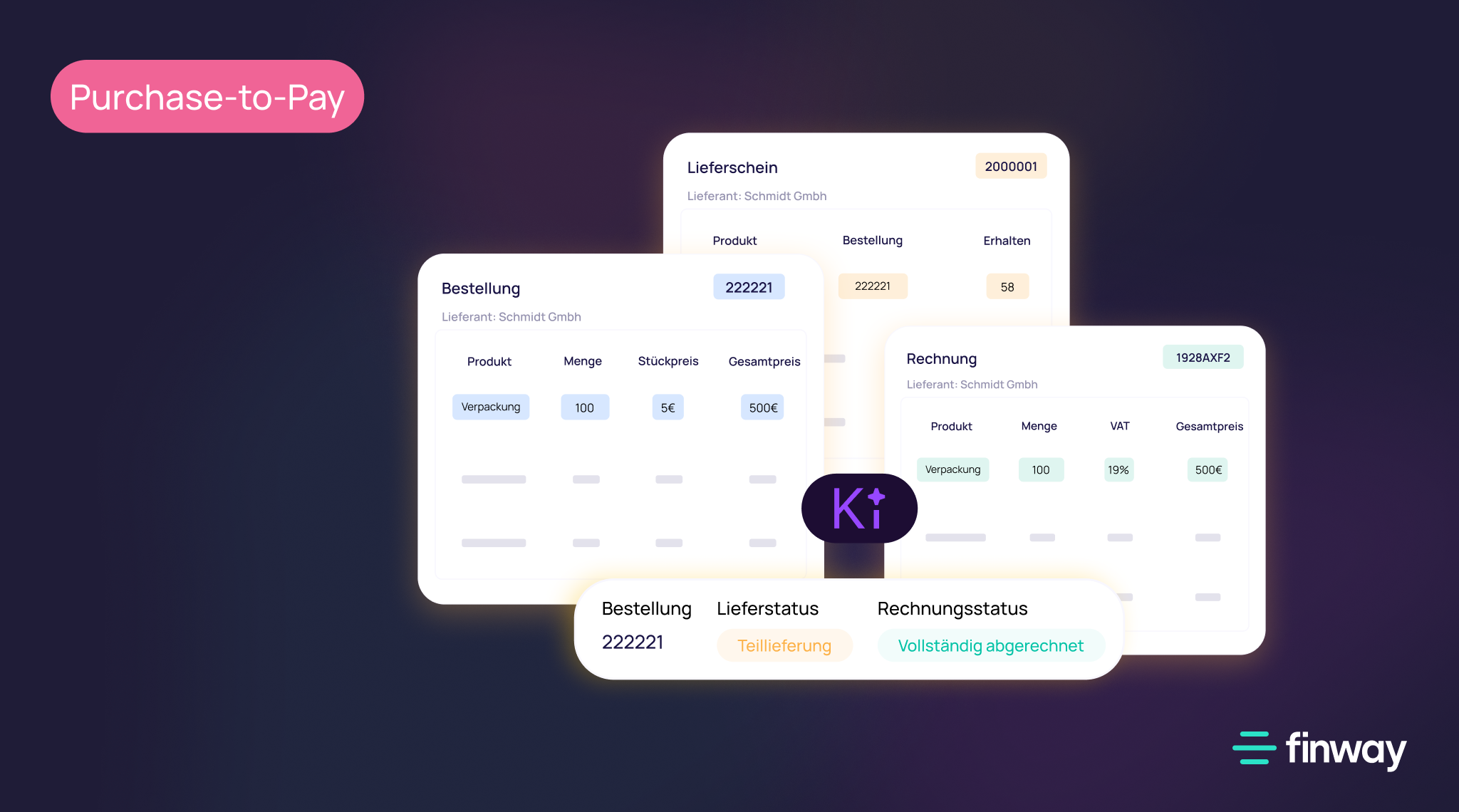
The Problem with Open Purchase Orders
Lack of Transparency in the Ordering System
Many companies operate with a sophisticated procurement process where a purchase order is created for every major acquisition. Initially, this creates structure and traceability. But over time, open POs accumulate—especially when orders are only partially fulfilled or projects are quietly discontinued.
A real-world example: A large software company regularly had a triple-digit number of open purchase orders in its system. Upon closer inspection, the finance team discovered that many of these POs were no longer in use. The requesters had simply forgotten to close them.
Two Core Problems for the Finance Department
When purchase orders remain open even though they are no longer needed, two serious challenges arise:
1. Accruals and Deferrals
The finance department must determine whether an accrual needs to be booked for the unused amount of an open order. Has the invoice perhaps just not arrived yet? Or was the order effectively canceled without being documented in the system? This uncertainty significantly complicates clean bookkeeping.
2. Distorted Liquidity and P&L Planning
Open purchase orders burden the planning process. As long as a PO is listed as “open” in the system, the remaining balance must be accounted for in liquidity planning and the profit and loss statement. This leads to a distorted picture of the actual financial situation and makes sound decision-making more difficult.