TL;DR: Effective spend management helps small and medium-sized enterprises reduce costs, eliminate process waste, and improve liquidity – without adding bureaucracy. Tools like finway enable SMEs to achieve up to 6% direct cost savings in procurement, process invoices up to 85% faster, and reach a positive ROI within the first quarter of implementation.
Why spend management makes or breaks SMEs

- Norman Rohr
- 28.07.26
- 11 min read
Picture this: A buyer spends two full hours on the phone with a supplier, negotiating hard to secure a 5% discount on a €1,500 order. He pushes back, escalates, and eventually succeeds. The saving? €75. The cost of his time, the internal approval chain, and the administrative back-and-forth? Easily double that – if not more.
This scenario plays out in SMEs across Germany every day. And it points to a deeper problem: many mid-sized companies focus their energy on the wrong levers. They negotiate where it hurts rather than where it counts.
Spend management isn’t just about cutting costs. It’s about knowing where your money goes, controlling how it flows, and building the kind of financial agility that lets you make smarter decisions faster. For SMEs with revenues up to €50M, this isn’t a nice-to-have – it’s a competitive necessity.
This post breaks down why spend management matters so much for SMEs, what the most common blind spots are, and how digital tools like finway help organizations move from reactive firefighting to strategic financial control.
What Does “The Hard Reality of Procurement” Actually Look Like in SMEs?
Most SMEs don’t have a dedicated procurement department. Purchasing decisions are spread across teams, approval processes live in email threads, and someone in accounting is manually entering invoice data into a spreadsheet – again.
The result is a procurement landscape that’s fragmented, slow, and expensive to operate. Not because people aren’t working hard, but because the processes themselves are broken.
Consider the numbers: In many mid-market companies, the cost of processing a single purchase order – including the time spent requesting, approving, ordering, receiving, and paying – can exceed the value of what was ordered. Low-value purchases, in particular, carry disproportionately high process costs.
Then there’s the issue of control. Without centralized spend visibility, maverick buying runs rampant. Employees order from unapproved vendors, bypass procurement workflows, and create compliance headaches. By the time finance notices, the damage is already done.
The good news is that these problems are solvable. But solving them requires a shift in mindset – from treating procurement as a back-office function to treating it as a strategic lever.
Spend Control and Agility Are Not Mutually Different Goals
One of the most common objections to formalizing spend management in SMEs is the fear of bureaucracy. “We’re too small for that.” “It’ll slow us down.” “We need to stay flexible.”
These concerns are understandable – but they’re based on an outdated model of what spend control looks like. Rigid paper-based approval chains and manual PO processes are slow by design. Digital spend management platforms work differently.
finway, for example, enables SMEs to implement
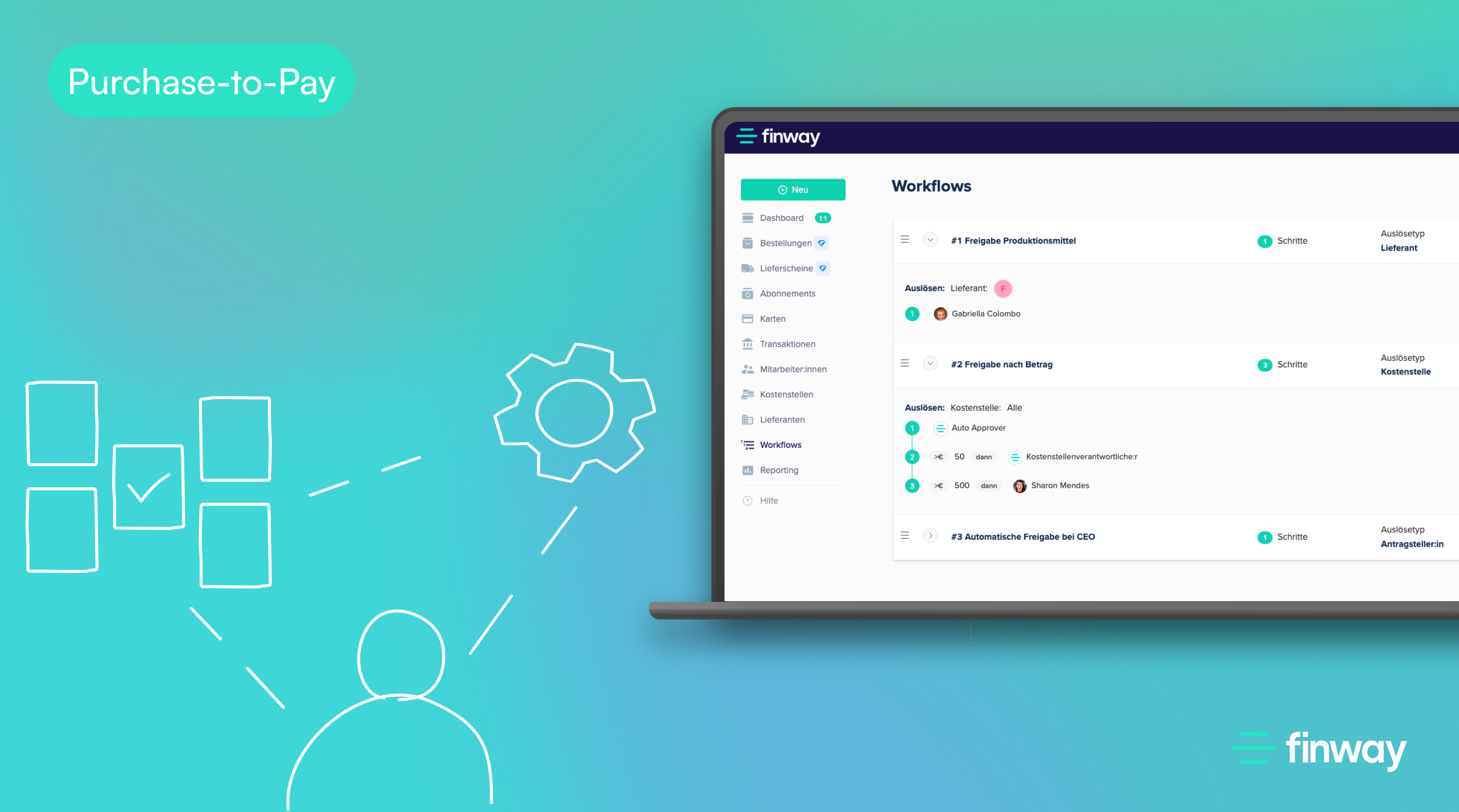
- multi-level approval workflows
- purchase order management
- real-time budget tracking without adding headcount or creating bottlenecks
Approval processes that once took days now take minutes. Invoice processing that required manual data entry now happens automatically, with AI-assisted pre-accounting reducing accounting effort by up to 60%.
The key insight: lean digital processes and strong financial controls are not mutually exclusive. An SME can maintain the speed and adaptability it needs while simultaneously having full visibility into every euro being spent.
finway’s implementation timeline reflects this philosophy. Technical onboarding typically takes just 2 to 6 weeks, with hands-on support throughout – no technical expertise required. That’s a fast path to control without the disruption of a lengthy ERP rollout.
Small Purchases, Big Process Costs: The Hidden Drain on SME Resources
Back to our buyer on the phone. Even if his €75 saving was real, the process cost almost certainly outweighed it. This is the paradox of low-value procurement: the smaller the order, the more disproportionate the overhead.
In procurement, this phenomenon is well-documented. The cost of processing a purchase – from requisition to payment – often ranges between €50 and €150 depending on the organization’s complexity and level of automation. For a €200 office supply order, that process cost can represent 50% or more of the order value itself.
The solution isn’t to eliminate purchasing controls on small orders. It’s to automate them. Digital spend management platforms allow SMEs to set spend thresholds, create pre-approved vendor catalogs, and issue company cards with individual limits – so low-value purchases happen quickly and compliantly, without anyone spending two hours on a phone call.
finway’s company cards (both virtual and physical) are a practical example of this. Employees can make approved purchases directly, with receipts automatically matched and pre-coded for accounting. The result: less friction for employees, less manual work for finance, and full spend visibility for management.
Payment Terms vs. Discounts: The Liquidity Lever Most SMEs Ignore
Here’s a question worth asking at your next finance review: Are you consistently capturing early payment discounts (Skonto) from your suppliers?
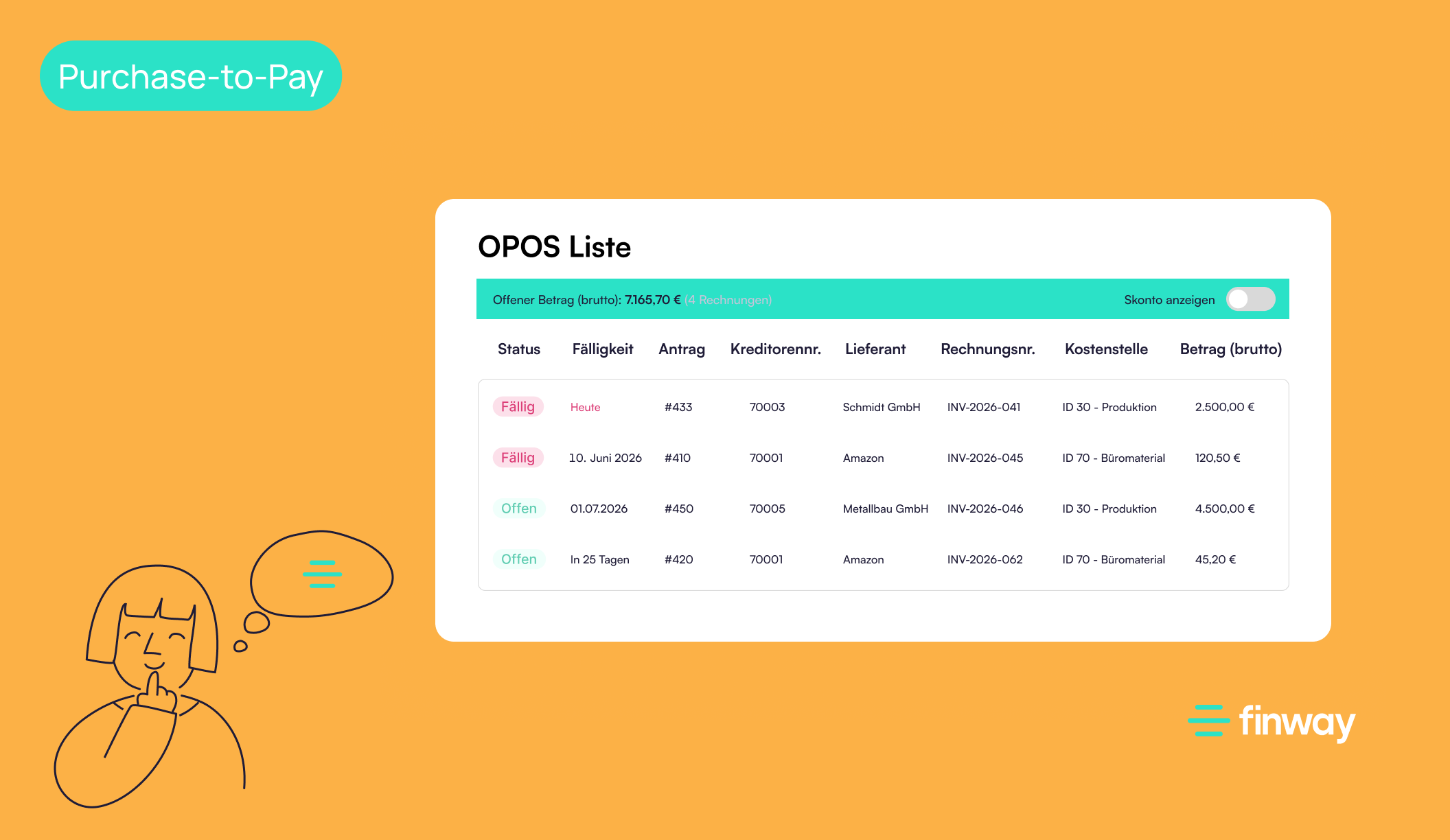
For most SMEs, the honest answer is no. Not because the discounts aren’t available, but because invoice processing is too slow to act on them. By the time an invoice has been received, manually entered, routed for approval, and cleared for payment, the early payment window has often closed.
This matters more than it might seem. A typical Skonto discount of 2% for payment within 10 days translates to an annualized return of roughly 36% – a liquidity lever that far outperforms most short-term financial instruments. Yet it remains one of the most consistently underutilized tools in SME finance.
Fast invoice processing is the prerequisite. With finway processing invoices up to 85% faster than manual workflows, SMEs gain the operational speed needed to capture these discounts reliably. Over time, that adds up – and it’s a genuine competitive advantage that has nothing to do with negotiating harder on price.
The broader principle: payment terms are often a more powerful value lever than unit price discounts. Optimizing when and how you pay is at least as important as what you pay.
Smart Procurement Tactics That Go Beyond Price Negotiation
Price negotiation gets most of the attention in procurement discussions. But for SMEs operating without dedicated category managers or procurement specialists, there are several other tactics that deliver outsized results with relatively low effort.
De-Contenting: Buy What You Actually Need
De-contenting means critically reviewing the specifications of what you’re purchasing and asking whether you’re buying more than you need. This applies to everything from office equipment to software licenses to raw materials. Downgrading a specification by 10–15% often yields similar cost savings to months of negotiation – without the relationship strain.
Demand Bundling: Consolidate to Negotiate
Many SMEs purchase the same categories across multiple departments or locations without coordinating. Bundling demand – combining volumes across business units and negotiating as a single buyer – dramatically improves leverage. Suppliers respond to volume; fragmented orders leave money on the table.
Framework Contracts: Lock in Pricing, Reduce Friction
For recurring purchases, framework contracts (Rahmenverträge) establish pre-agreed pricing and terms for a fixed period. This eliminates the need to re-negotiate every order, reduces maverick buying, and creates predictability for both buyer and supplier. For SMEs, even simple framework agreements with key vendors can generate meaningful savings.
Avoiding Maverick Buying: Control Where Spend Actually Happens
Maverick buying – purchasing outside of approved suppliers and processes – is one of the most significant sources of value leakage in SMEs. It inflates costs, creates compliance risks, and makes spend analysis unreliable. Digital procurement platforms like finway address this directly through purchase requisition workflows, approved vendor lists, and spend controls that prevent unauthorized purchases before they happen.
Spend Management as a Strategic Asset for Growing SMEs
Put all of these elements together – automated processes, real-time budget visibility, fast invoice processing, smart procurement tactics – and spend management starts to look less like a cost-control exercise and more like a strategic capability.
For SMEs targeting growth, financial control is the foundation everything else is built on. You can’t scale what you can’t see. You can’t optimize what you can’t measure. And you can’t make confident investment decisions when your financial data is three weeks out of date and scattered across email chains and spreadsheets.
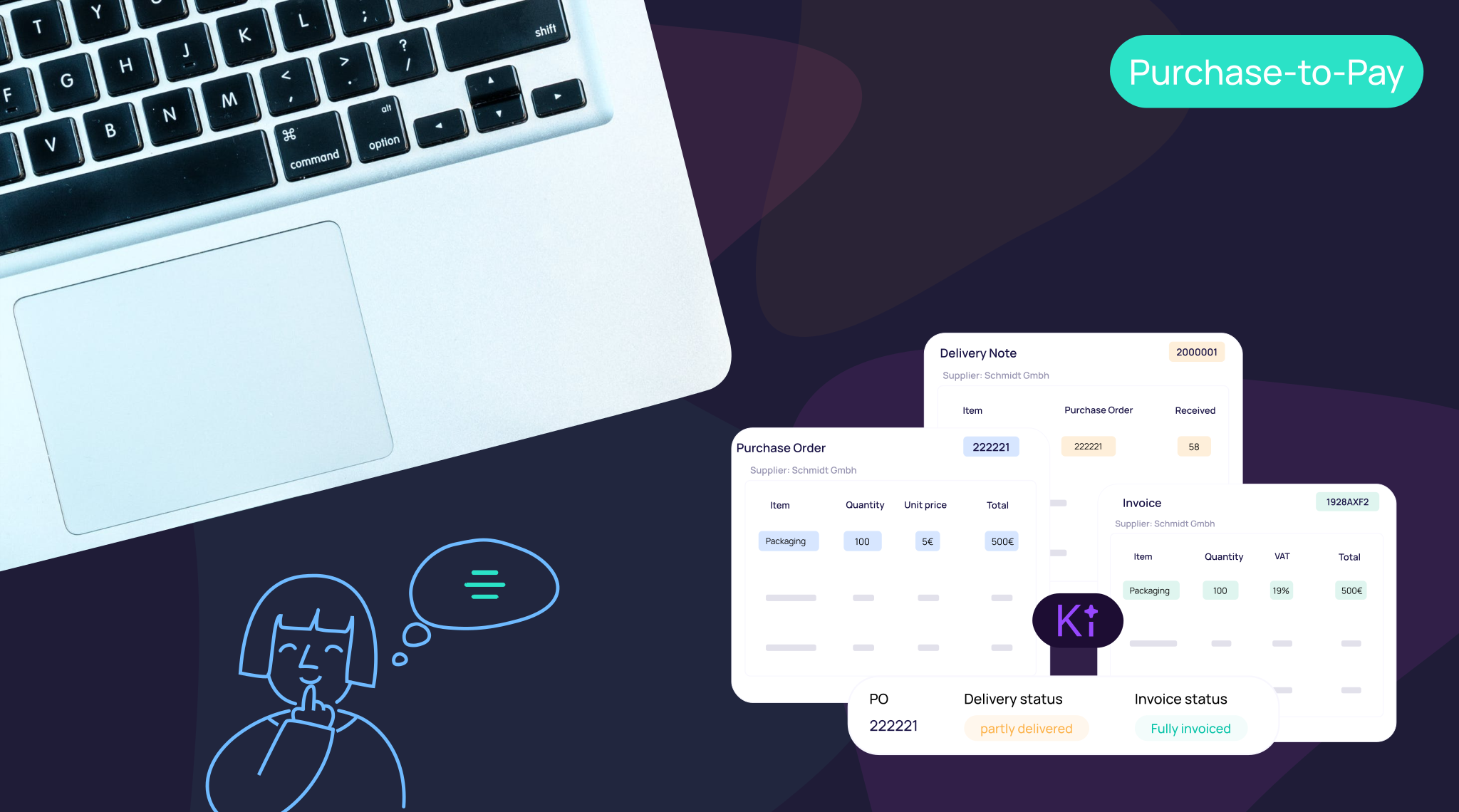
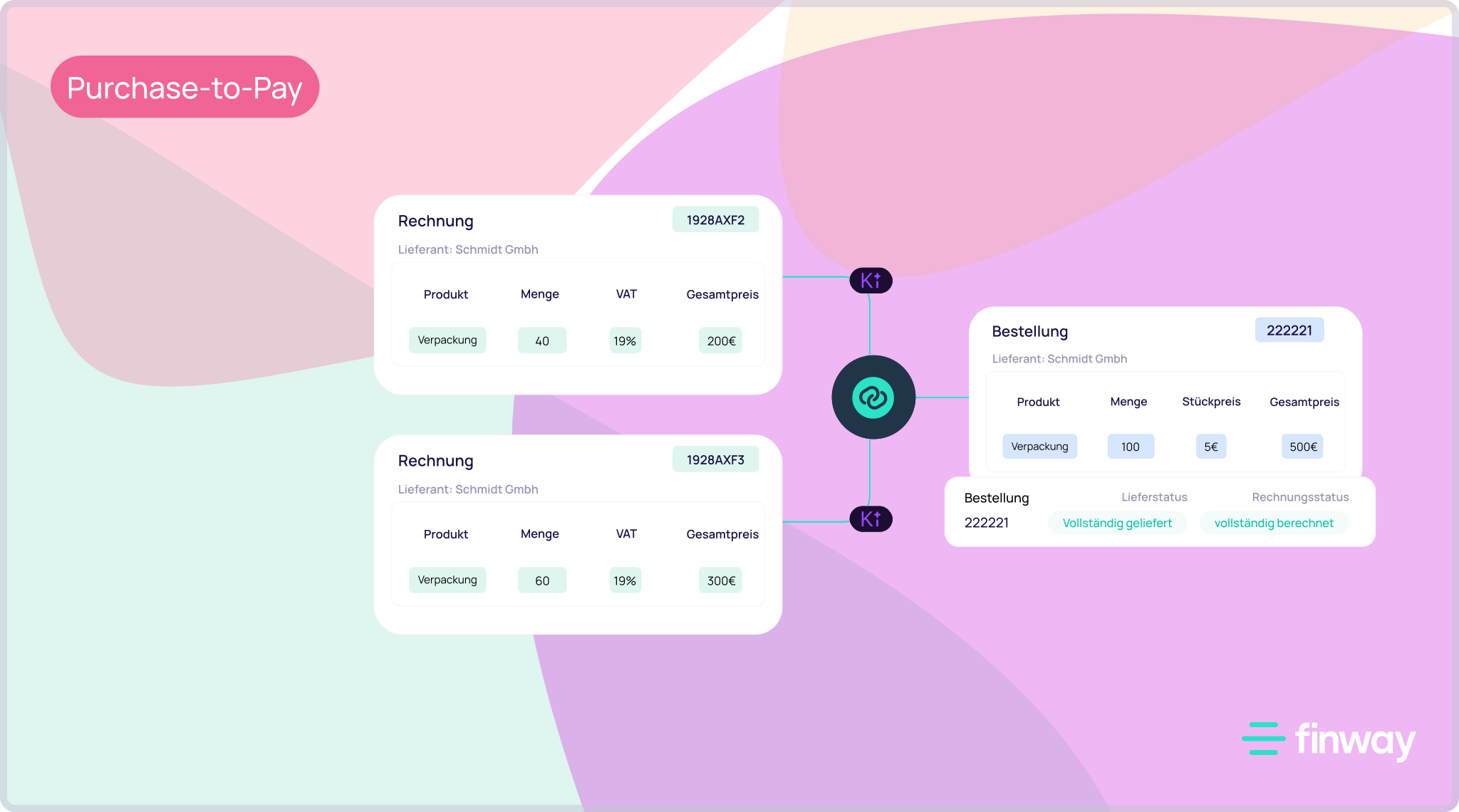
finway addresses this by centralizing the entire purchase-to-pay process in one platform: from purchase requisitions and order management, through three-way matching of orders, delivery notes, and invoices, to payment and pre-accounting for DATEV. Every transaction is tracked, every approval is documented, and every budget is visible in real time.
The financial case is compelling. finway delivers up to 6% direct cost savings in procurement, reduces accounting effort by up to 60%, cuts the workload for tax advisors by up to 40%, and generates a positive ROI within the first quarter. For an SME with €10M in annual spend, a 6% reduction in procurement costs represents €600,000 in savings – material impact, not marginal improvement.
The Cost of Waiting Is Higher Than You Think
There’s a version of this story where the buyer puts down the phone, opens a laptop, and realizes that his organization has been spending tens of thousands of euros on process costs, missed discounts, and uncontrolled purchases – not because of bad intentions, but because the right tools and processes were never put in place.
The shift from reactive to strategic spend management doesn’t require a transformation program. It requires the right platform, a clear implementation plan, and the willingness to stop optimizing at the margins and start fixing the fundamentals.
Spend control and business agility reinforce each other when done right. The SMEs that understand this – and act on it – are the ones that turn procurement from a cost center into a genuine source of competitive advantage.
Ready to take control of your company’s spend? Book a free, no-obligation demo with the finway team at www.finway.de and find out how much your SME could save.
Frequently Asked Questions About Spend Management for SMEs
What is spend management, and why does it matter for SMEs?
Spend management refers to the processes and tools an organization uses to control, track, and optimize how it spends money – covering everything from purchase requisitions and supplier contracts to invoice processing and payment execution. For SMEs, effective spend management reduces costs, eliminates process waste, and provides the financial visibility needed to make confident business decisions.
How much can an SME realistically save through better spend management?
The savings potential varies by organization, but the numbers are significant. Direct procurement cost savings of up to 6% are achievable through better supplier management, demand bundling, and maverick buying prevention. Indirect savings – through faster invoice processing, reduced accounting effort (up to 60%), and lower tax advisor costs (up to 40%) – add further impact. SMEs using finway typically achieve a positive ROI within the first quarter of implementation.
What is maverick buying, and how can SMEs prevent it?
Maverick buying occurs when employees purchase from unapproved suppliers or outside of established procurement processes. It increases costs, creates compliance risks, and undermines spend visibility. SMEs can prevent maverick buying by implementing purchase requisition workflows, approved vendor catalogs, and company card controls – all features available within finway’s spend management platform.
Are early payment discounts (Skonto) worth pursuing for SMEs?
Yes, and they’re often underutilized. A 2% discount for payment within 10 days equates to an annualized return of approximately 36% – far higher than most short-term financial alternatives. The prerequisite is fast invoice processing. finway processes invoices up to 85% faster than manual workflows, giving SMEs the operational speed to consistently capture these discounts.
How long does it take to implement a spend management platform like finway?
finway’s technical implementation typically takes between 2 and 6 weeks, with personalized onboarding support and team training included. No technical expertise is required internally. The platform integrates directly with DATEV and supports exports to formats compatible with Agenda, Lexware, ADDISON, and other common accounting tools used by German SMEs.
Is finway suitable for SMEs that don’t yet have formal procurement processes?
Yes. finway is designed specifically for SMEs in the German market, including those transitioning from informal, spreadsheet-based processes to structured digital workflows. The platform is built to be intuitive and scalable, making it accessible for teams without dedicated procurement or finance specialists.
What is the difference between spend management and accounts payable automation?
Accounts payable (AP) automation focuses on the processing side – capturing invoices, routing them for approval, and executing payments. Spend management is broader: it includes upstream controls like purchase requisitions, budget management, supplier contracts, and spend analytics. finway covers both, providing an end-to-end purchase-to-pay solution that connects procurement decisions to payment outcomes.

Norman Rohr
Norman ist seit 2024 CEO von finway. Er verfügt über einen Master in International Business (ISM) und einen MBA in Finance & Strategy (Melbourne Business School). Mit über 20 Jahren Erfahrung in der Technologie- und Digitalmedienbranche auf vier Kontinenten ist er ein ausgewiesener Marketing- und Revenue-Experte. Bevor er zu finway kam, hatte er Führungspositionen bei Unternehmen wie Google, SVOX, Pixability, Uberall, Xentral ERP Software und Capmo inne und beriet zahlreiche weitere Firmen.