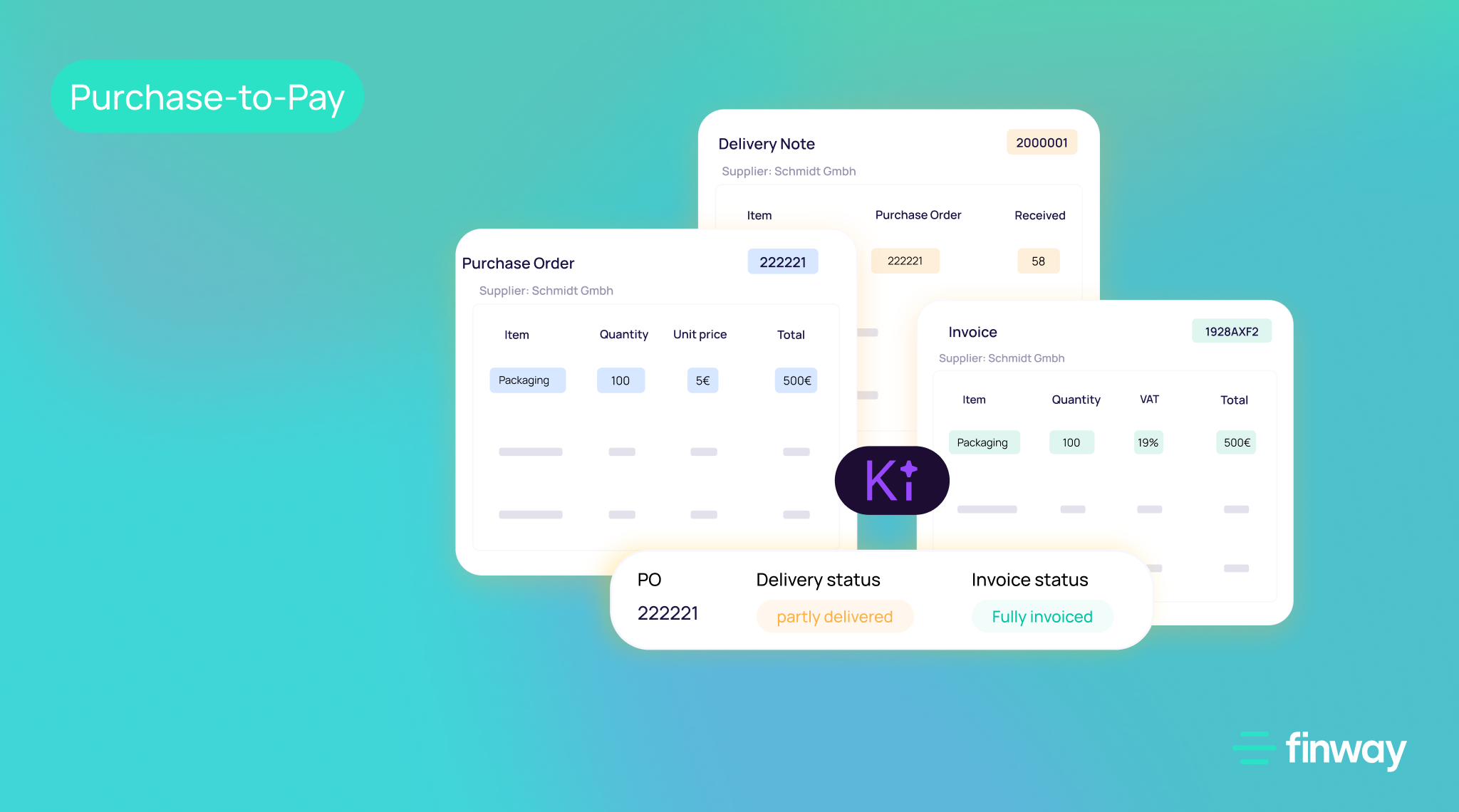
Three-Way Matching: Your Shield Against Errors and Fraud
Three-way matching is a central control mechanism in financial accounting. It ensures that a company only pays for what it ordered and actually received. This involves comparing three documents:
- Purchase Order: What was ordered and at what price?
- Delivery Note/Goods Receipt: What was actually delivered?
- Invoice: What is being billed?
If all three documents match, the invoice is approved for payment. This process effectively prevents overpayments, protects against fraud attempts, and ensures the accuracy of your bookkeeping.
Why Matching at the Line-Item Level is Crucial
A critical factor for the effectiveness of three-way matching is the level of detail. A reconciliation that only compares the total amounts of an invoice and a purchase order is insufficient. True precision and control are only achieved through matching at the line-item level.
This means every single item—every screw, every license, every service—is checked for quantity, item description, and price. This is the only way you can reliably identify discrepancies such as partial deliveries, incorrect items, or price errors. A system that doesn’t do this offers only a false sense of security.
Just think about how often you have partial deliveries or partial payments, or how often you receive deliveries and invoices that relate to different orders and deliveries.